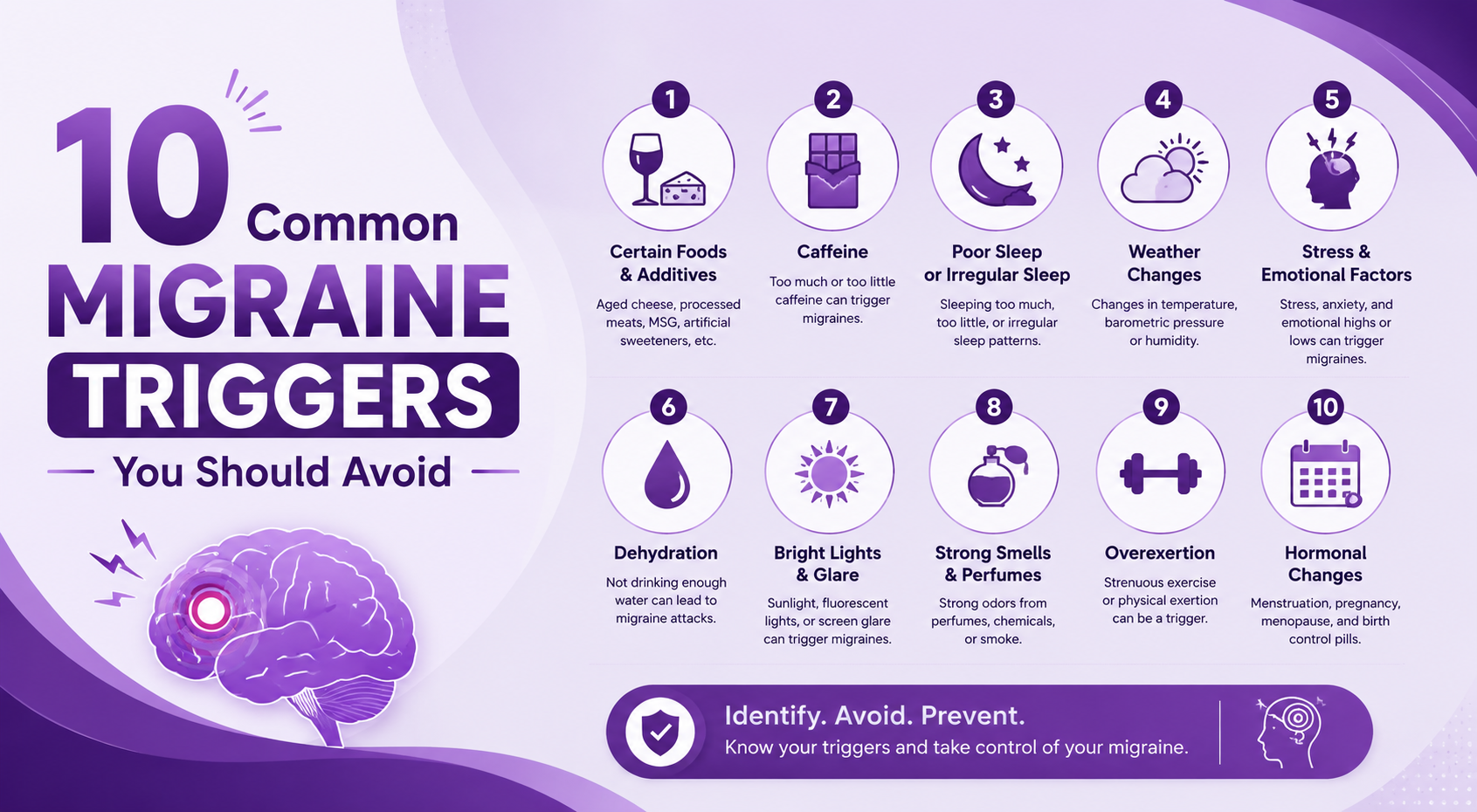
10 Common Migraine Triggers You Should Avoid
Migraines are more than just severe headaches. They are a neurological condition that can cause intense throbbing pain, nausea, sensitivity to light and sound, and visual disturbances. While treatment options are available, understanding your migraine triggers is one of the most effective ways to prevent attacks.
Not everyone experiences migraines for the same reasons. However, several common lifestyle and environmental factors are known to increase the risk. Here are the top 10 migraine triggers you should be aware of and practical ways to avoid them.
1. Stress and Anxiety
Stress is one of the leading migraine triggers. Emotional tension causes changes in brain chemicals that may lead to migraine attacks.
Tips to reduce stress:
- Practice meditation or deep breathing.
- Exercise regularly.
- Maintain a healthy work-life balance.
- Get adequate rest.
2. Lack of Sleep
Poor sleep quality, sleeping too little, or even oversleeping can trigger migraines. A consistent sleep schedule supports healthy brain function.
Sleep recommendations:
- Aim for 7–9 hours of sleep each night.
- Go to bed and wake up at the same time daily.
- Avoid screens before bedtime.
3. Dehydration
Even mild dehydration can contribute to migraine headaches. Water helps maintain proper blood circulation and brain function.
Prevention tips:
- Drink enough water throughout the day.
- Increase fluid intake during hot weather or exercise.
- Limit excessive caffeine and alcohol.
4. Skipping Meals
Missing meals or fasting may lower blood sugar levels, increasing the likelihood of migraines.
Healthy habits include:
- Eat balanced meals at regular intervals.
- Choose foods rich in protein, whole grains, and fruits.
- Avoid prolonged periods without eating.
5. Certain Foods and Beverages
Some foods may trigger migraines in sensitive individuals. Common examples include:
- Aged cheese
- Processed meats
- Chocolate
- Artificial sweeteners
- Monosodium glutamate (MSG)
- Alcohol, especially red wine
Keeping a migraine diary can help identify personal food triggers.
6. Hormonal Changes
Hormonal fluctuations during menstruation, pregnancy, or menopause may increase migraine frequency in women.
If migraines are linked to hormonal changes, consult a healthcare professional for appropriate evaluation and treatment options.
7. Bright Lights and Screen Exposure
Bright sunlight, flashing lights, and prolonged screen time can overstimulate the brain and trigger migraines.
Protect yourself by:
- Wearing sunglasses outdoors.
- Using blue-light filters on digital devices.
- Taking regular screen breaks using the 20-20-20 rule.
8. Strong Smells
Perfumes, cigarette smoke, paint fumes, and chemical odors are common environmental migraine triggers for many people.
Whenever possible:
- Avoid strong fragrances.
- Ensure proper ventilation indoors.
- Stay away from smoke-filled environments.
9. Weather Changes
Changes in temperature, humidity, air pressure, or extreme heat may trigger migraines in some individuals.
Although weather cannot be controlled, staying hydrated and avoiding prolonged exposure to extreme conditions may help reduce the risk.
10. Excessive Caffeine
While small amounts of caffeine may relieve headaches for some people, excessive consumption or sudden caffeine withdrawal can trigger migraines.
Suffering From Frequent Headaches?
Consult an experienced neurologist for accurate diagnosis and personalized headache treatment in Noida, Greater Noida & Delhi NCR.
Call Now Book AppointmentQuick Contact
-
Phone +91 8882400396
-
Email drhnyaddav@gmail.com
-
Location Noida, Greater Noida, Delhi NCR
Headache Services
- Migraine Treatment
- Chronic Headache Management
- Cluster Headache Treatment
- Tension Headache Care
- Neurological Evaluation
- Preventive Headache Therapy
Emergency Warning Signs
Seek immediate medical attention if you experience sudden severe headache, loss of consciousness, vision loss, weakness, or difficulty speaking.
Emergency Consultation